
It is worth it when somebody has found something. A musty smell that arrives in the first minute of a cycle. Growth on the coil or in the first run of duct. Water that got into the system. Renovation debris. Each of those is a finding, not a guess, and each leaves something a cleaning removes.
Put in your square footage and get the price.
$200Minimum whole-home job
- Add vents on the same visit, $50 each
- 12-month guarantee
Closed now. Opens today at 8 am.
Request a windowGreg confirms it in writing.Call 843-282-7777Do not know the square footage? You can still ask for a visit. We work it out when we come out.
Does it work? On the surfaces it reaches, yes. The registers, the duct work, the coil and the outside of the air handler get cleaned, then treated. That is where a musty smell lives.
Veteran owned. Licensed and insured. EPA-registered antimicrobial. 12-month guarantee.
Book it Call: 843-282-7777 or send us a message
What makes a duct job worth paying for?
A finding. Something that is there now, that somebody has seen or smelled, and that a cleaning can remove. Four of them come up again and again in Lowcountry houses.
A musty smell in the first minute of a cycle. The coil is wettest right after the system starts, so that is when the odor is strongest. The EPA names the mechanism: condensation on or near the cooling coils of air conditioning units is a major factor in moisture contamination of the system (source). A smell tied to the fan running, rather than to cooking or a damp room, points at the system itself.
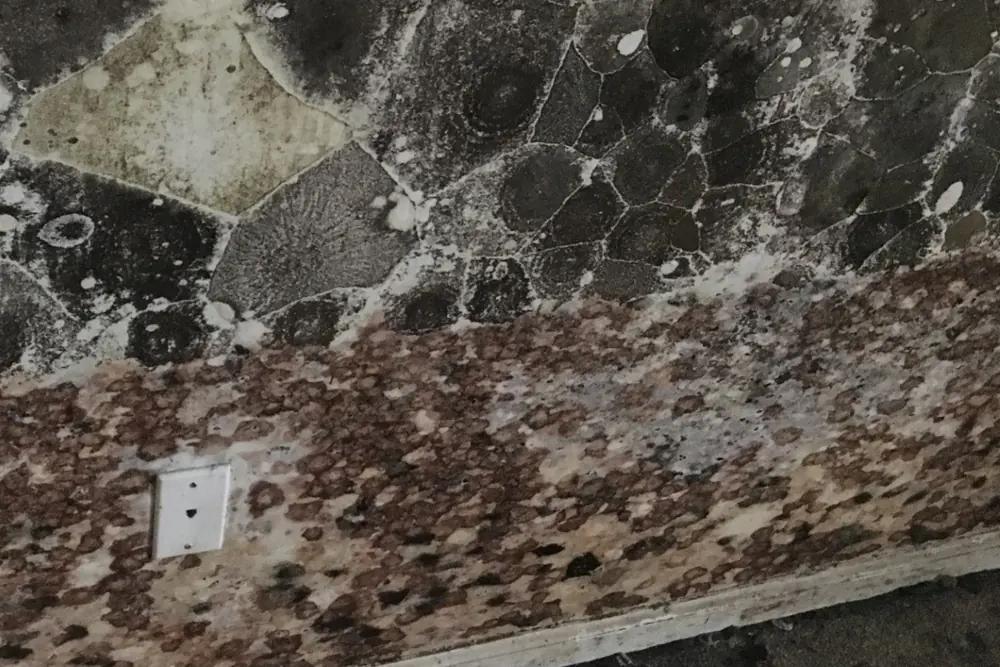
Growth you can see. On the coil, on the first run of duct off the air handler, or dark specks around the registers. This is the EPA’s own first reason to clean: “There is substantial visible mold growth inside hard surface (e.g., sheet metal) ducts or on other components of your heating and cooling system” (source).
Water that got into the system. A storm, a line that backed up, a drain pan that overflowed. Wet metal and wet dust is the start of every one of these jobs.
Renovation debris. Drywall dust and sawdust go into an open return and stay there. New construction and a remodel both do it.
The EPA lists two more reasons of its own: ducts “infested with vermin, e.g. (rodents or insects)”, and ducts “clogged with excessive amounts of dust and debris and/or particles are actually released into the home from your supply registers” (source). If debris is coming out of a register onto the floor, that is a finding too.
Does duct cleaning really work?
Yes, on the surfaces it reaches, and those are the surfaces a musty smell grows on. Cleaning takes the dust and debris off them, and we go over the system twice, because one pass gets what is loose and the second gets what is stuck. Then BactroKill Plus goes on those same surfaces, EPA Reg. No. 82972-1-90746, applied to its label: a bacteriostat, fungistat and mildewstat for HVAC systems and air ducts in residential settings, and a deodorizer that works by oxidation rather than by masking. The cleaning moves the dust. The treatment deals with what the dust was growing on.
What it does not do is fix the water. If a duct is still sweating or a condensate line is still backing up, the moisture has to be dealt with too, by us telling you what is wet or by an HVAC company fixing it.
How do you tell a real duct job from a ripoff?
Four tests, and you can run all four before anybody is standing in your hallway.
1. Did the price come before anybody looked, and does it hold? A number that moves once the technician is inside your house was never a price. The EPA puts a typical duct cleaning at $450 to $1,000 per heating and cooling system (source). A flat special advertised well under that, before anyone knows how many vents you have, is worth one question: what is included at that number, and what does the rest cost? Ours is $50 a vent, counted off your own house, and it is the number on the invoice.
2. Do they clean before they treat? This is the one most people never think to ask. The EPA’s instruction on chemical treatments in a duct system is plain: “They should only be applied, if at all, after the system has been properly cleaned of all visible dust or debris” (source). Spraying over dirt is the shortcut, it is faster, and it is why a smell comes back in a month. We clean first.
3. Can you read the scope? Ours is four things and they are the same four every time: the registers, the duct work, the coil and the outside of the air handler. “Whole house special” is not a scope. Ask what is in it and what is extra.
4. Is there anything in writing afterward? Ours is a 12-month guarantee, on the invoice: if what we treated comes back inside the year, we come back and re-treat it. No charge. The treatment certificate transfers if you sell the house.
One more thing worth knowing, because it turns up on a lot of duct cleaning ads: “EPA neither establishes duct cleaning standards nor certifies, endorses, or approves duct cleaning companies” (source). There is no EPA blessing for a duct cleaner to hold. A product can carry an EPA registration number, and ours does: EPA Reg. No. 82972-1-90746.
What changes the answer?
Whether the moisture got fixed. The EPA’s own line: “Controlling moisture is the most effective way to prevent biological growth in air ducts” (source). A cleaning and a treatment against a duct that is still sweating is a reset, not a repair. We tell you what is wet. Getting the humidity down, or the condensate line draining, is what makes the work hold.
Hard surface or porous. Sheet metal duct, registers, the coil and the outside of the air handler clean up and hold a treatment. Insulation is a different story, and the EPA is direct about it: “If you have insulated air ducts and the insulation gets wet or moldy it cannot be effectively cleaned and should be removed and replaced” (source). Soaked fiberglass duct board or internal liner is a replacement job for an HVAC company, not a cleaning job for us, and we say so when that is what is in front of us.
Whether anybody has actually looked. You can do the first look yourself in five minutes. Take a register cover off and look down the run with a flashlight. Look at the coil if you can reach it, or ask the HVAC company that services your unit what the coil looked like the last time they had the cover off. What you find there decides whether any of this is worth buying.
What does it cost, and what happens on the day?
The whole-house treatment is priced at one posted rate for every heated square foot of your home, the same rate on every house we treat, with a $200 minimum job. The air system is the add-on at $50 a vent. On their own the vents carry a $399 minimum, and that minimum comes off when they go on a whole-house job.
The rate is $0.30 a square foot, and it does not move between houses.
Time at the house: about 30 minutes at 1,500 square feet, 45 at 2,500 and 75 at 3,500 for the house. About 90 minutes at 12 vents for the air system.
You can stay in the house while we work. People and pets keep out of the room while we spray it, and it is yours again fifteen minutes later. You get the whole number before anyone comes out, and an arrival window in writing.
How to buy this properly
Buy it the way you would check any other trade, and you can run the whole check from your phone.
1. Get the number before anyone is in your hallway. Put your heated square feet in above and the total comes back on the screen. It is the number on the invoice. You have not spoken to anyone and nobody has your address yet.
2. Read the scope against the number. Ours is the rooms inside the square feet you gave us, plus, if you add the vents, the registers, the duct work, the coil and the outside of the air handler. Four things, the same four every time. Hold any other quote to the same test.
3. Add the vents if the smell is at the vents. On a musty-AC call the air system is the half doing the heavy lifting. Put it on the same visit and the $399 vent minimum comes off.
4. Pick the window. Greg confirms it by hand and you get the price and the window in writing. Monday to Friday 8 to 4, Saturday 8 to 12.
If you have looked and found nothing yet, the coil is the place to look and the price above will still be there when you have. Nothing about it changes because you took a week.