
Whole-home disinfection for mold means every surface in the house gets sprayed with BactroKill Plus, an EPA-registered product, by electrostatic sprayer: every room, closets included, plus the duct work and the drain pan. It is spraying, not cleaning, so growth you can see and dirty vents get cleaned first. Bactronix of the Lowcountry prices it at $0.30 per heated square foot with a $200 minimum, and backs it with a 12-month written guarantee. A 1,500 square foot house takes about 30 minutes, and you can stay home.
See your price
- Whole-home disinfection: $0.30 per heated sq ft ($200 minimum)
- Clean the vents on the same visit: $50 each (no extra minimum)
- Both include Bactronizing with BactroKill Plus + 12-month written guarantee
Not sure what you need?
Start with the vents
A smell that rides the air is growing in the duct work. We scrub each vent and return with a rotary brush, clean the registers, the coil and the outside of the air handler, then treat them. $50 a vent, from $399 on its own. Spores travel on the air, so most people add the whole-home disinfection on the same visit, and then the vents carry no minimum. 12-month written guarantee.
Start with the whole home
A smell that sits in the rooms, or came with the last people, is on the surfaces, not only in the air. Whole-home disinfection sprays every surface in the house, closets included, plus the duct work and the drain pan: $0.30 per heated square foot, $200 minimum, about 30 to 75 minutes, and you can stay home. Dust or growth in the vents needs cleaning first, so add the air duct cleaning at $50 each on the same visit if the vents are dirty. 12-month written guarantee.
We look first
Mold you can see gets wiped off, not sprayed over. Every one is different, so we look before we price it, and Greg puts the price in writing before any work starts.
Fix the water first
Mold is a water problem first. Wet material grows again, so the leak, the flood or the drain line gets fixed before anything is sprayed. Once it is dry we treat it, and if something is still wet we say so before we start.
Two ways to be sure
If you can smell it or see it, the CDC says you do not need to know the type, so most people skip the test and treat. To be sure anyway: while we are at the house we can swab a surface and read it on a hand-held meter, or send samples to a lab, $350 for two and $450 for four.
Request a window Or start with the treatment Call 843-282-7777
Closed now. Opens today at 8 am.
Request a windowGreg confirms it in writing.Call 843-282-7777Do not know the square footage? Request a visit without a number. We work it out when we come out.
Veteran owned. Licensed and insured. EPA-registered product. 12-month written guarantee.
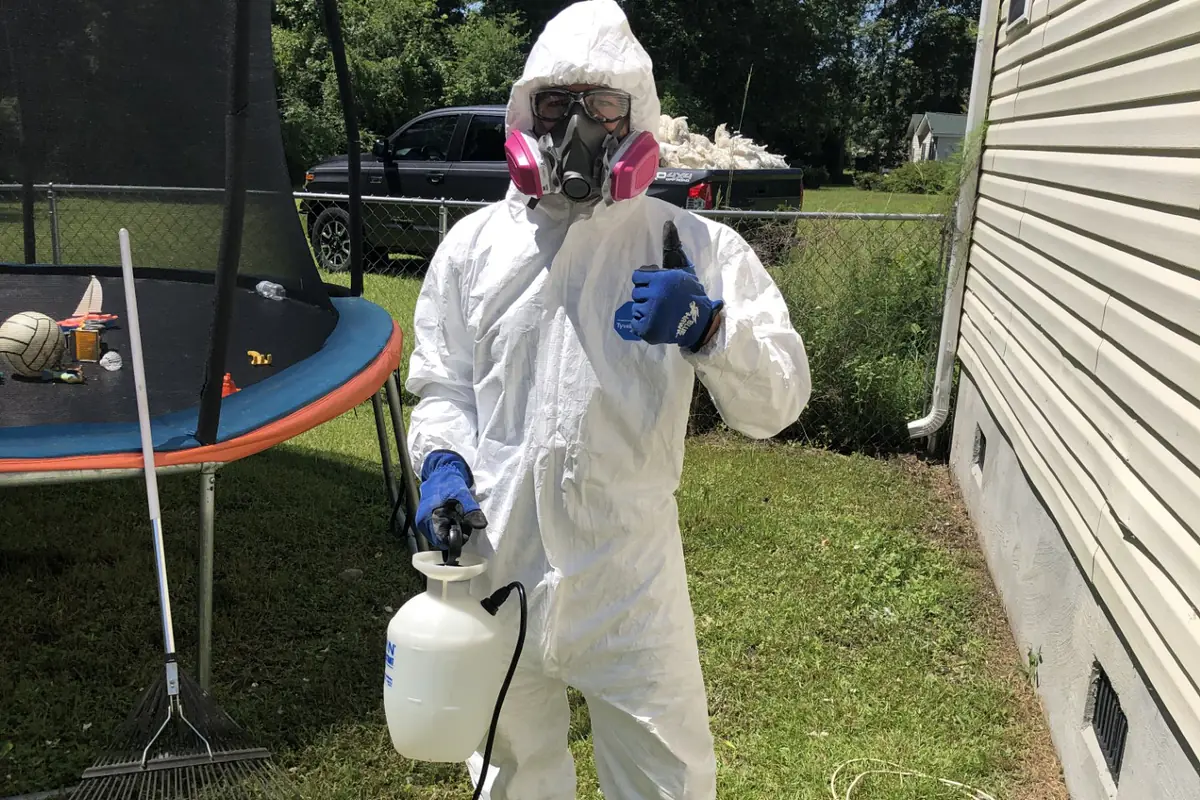
How the job runs, step by step
1. We find the moisture. Mold is a water problem before it is a mold problem. The EPA says it plainly: “the key to mold control is moisture control” (EPA, A Brief Guide to Mold, Moisture and Your Home). In a Lowcountry house it is usually a cold duct sweating in humid air, a condensate line that has stopped draining, or a leak that dried and left food behind. If something is wet, we tell you what is wet.
2. What needs cleaning gets cleaned first. Spraying does not take dust or growth off a surface. The EPA cautions against fogging biocide into ductwork that has not been cleaned, and we agree with it. Growth you can see on a ceiling or a wall gets removed, and that part is looked at and quoted on its own, because every one of them is different. Vents with dust or growth in them get the vent cleaning: each vent and return scrubbed with a rotary brush, then the registers, the coil and the outside of the air handler.
3. We apply the antimicrobial. BactroKill Plus, EPA Reg. No. 82972-1-90746, applied to its label by the Bactronizing electrostatic process. The sprayer puts a charge on the droplets so they wrap around a surface instead of landing only on the side facing the nozzle. We work room by room through the heated square footage you gave us, closets included, and the duct work and the drain pan get the same pass.
4. We stand behind it for 12 months. If what we treated comes back inside the year, we come back and re-treat it. No charge. The certificate transfers if you sell the house.
What does mold treatment cost?
$0.30 for every heated square foot, the same rate on a cottage and on a four-bedroom, with a $200 minimum. Put your square footage in above and the whole number comes back before anyone comes out.
Closets are included. The garage is included when its footage is part of the number you gave us.
No trip charge, no estimate fee, no separate labor line. You pay on the day.
What the treatment covers
- Every room inside the heated square footage you gave us, closets included
- The duct work and the drain pan, sprayed on the same pass (not cleaned: that is the vent job)
- The garage, when its footage is in that number
- BactroKill Plus, an EPA-registered antimicrobial, applied by the Bactronizing electrostatic process
- A 12-month limited guarantee and a transferable treatment certificate
Cleaning the vents is its own line with its own price, and it is covered further down this page.
That is the list. If a job needs something outside it, we say so before we start rather than after.
How long does it take, and can we stay home?
| Heated square feet | Time at the house |
|---|---|
| 1,500 | About 30 minutes |
| 2,500 | About 45 minutes |
| 3,500 | About 75 minutes |
These are the times we plan the day around, which is why we ask for the square footage before offering you a window. A bigger house needs a longer one.
You can stay in the house. Keep people and pets out of the room while we spray it, and it is yours again fifteen minutes later. You can move through the rest of the house while we work.
What is in the jug?
BactroKill Plus, an EPA-registered disinfectant, EPA Reg. No. 82972-1-90746. Its actives are chlorine dioxide at 0.200 percent plus two quaternary ammonium compounds at 0.125 percent each, read off the jug we carry.
- Controls mold and mildew on hard surfaces. It has to stay wet on the surface for ten minutes to do it.
- Kills 99.9 percent of bacteria on hard, non-porous surfaces, mixed one part to nine parts water and left wet for five minutes.
- Takes out musty, smoke and cooking odors by oxidizing them rather than covering them.
- A residential, commercial and hospital disinfectant. Tuberculocidal at ten minutes wet.
- Does not stain or bleach materials or fabrics and will not harm HVAC system components. Nothing needs rinsing afterward.
- No rinse needed on food contact surfaces. NSF listing 170247.
The product goes on last, after the cleaning. Spraying over growth that is still sitting there does not deal with it.
Same spray, a different reason to book
Plenty of these visits have nothing to do with mold. Same product, same sprayer, same price by the heated square feet, and the room is yours again fifteen minutes after we spray it.
- Just moved in. The house carries the last people’s smell, their pets and their smoke. Customers call it the stale, lived-in smell of a house that has been occupied for years.
- Back from a trip. A house shut up for two weeks in a Lowcountry August comes back smelling closed.
- After a bug goes through the house. Kitchen, bathrooms, doorknobs, light switches, the handles everybody touched.
- Before a new baby or a parent moves in. People want the house done before the furniture arrives, not after.
- A rental turnover. Between guests or between tenants, on the same visit as the vents.
- The house sold. An odor-free listing shows better, and a brand-new house can smell musty too.
Offices, warehouses, multi-unit buildings and short-stay rentals are quoted off a walkthrough instead of a posted price. That work is on Commercial.
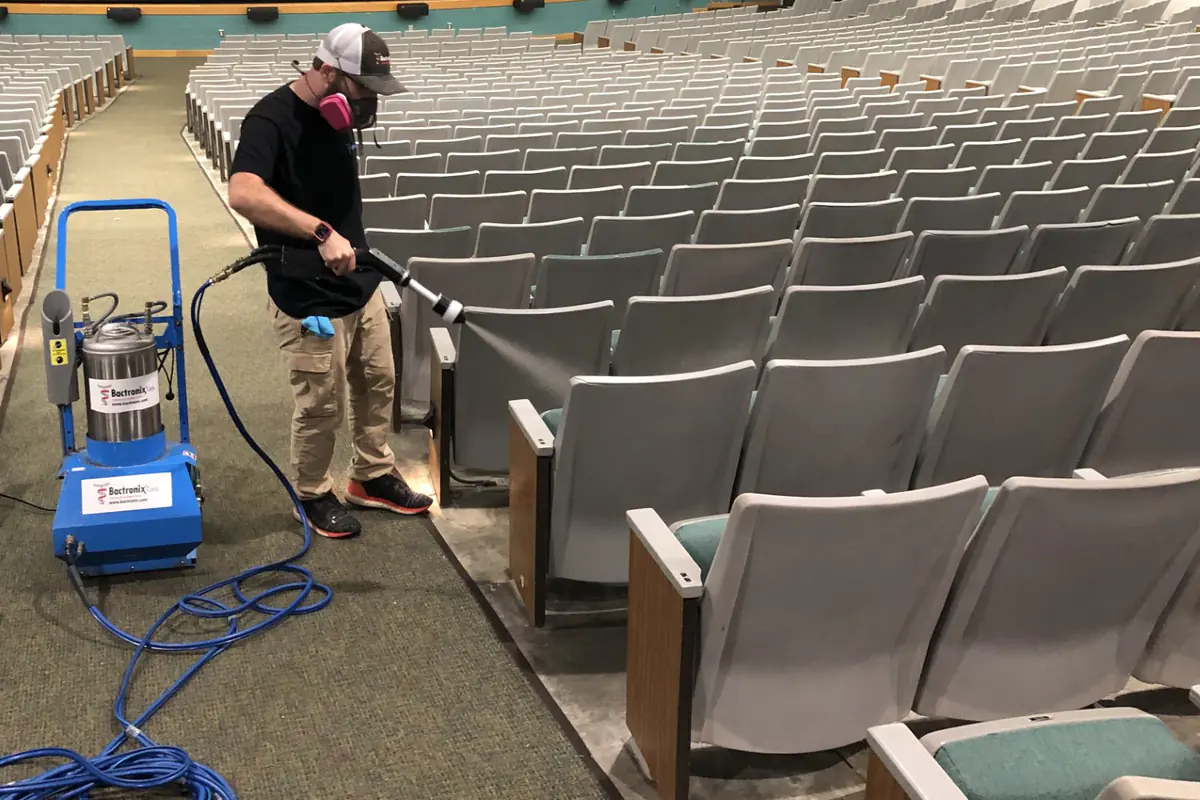
Adding the air duct cleaning and treatment
If the smell is worst when the AC or heat starts, or there is dust or growth at the registers, the vent cleaning is the part to add: the whole-home spray reaches the duct work, but it does not take dirt off. Air duct cleaning and treatment is $50 for each vent and each return on the same visit, however many you have, with no extra minimum. On its own, air duct cleaning and treatment starts at $399. The truck is parked and the door is open, so the only thing the vents cost on that visit is the vents.
What the vent job does: each vent and return is scrubbed with a rotary brush, the registers, the cooling coil and the outside of the air handler are cleaned, then it all gets the antimicrobial. Spores travel on the air, so most people who have growth in the vents do the whole house on the same visit.
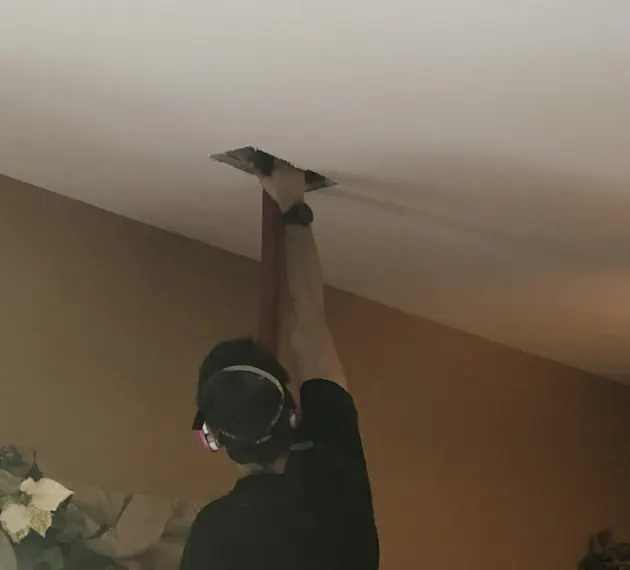
There is room for a vent count too, so you can price the house and the vents together. Air duct cleaning and treatment on its own is $50 a vent from a $399 minimum, and is set out in full on the per-vent page.
The dryer vent is $50 added to a visit we are already making, or $99 booked on its own. We offer it at the booking step, when the window you picked still has room for it.
Mold you can see, and mold in a crawlspace
Crawlspaces, basements and poorly ventilated corners grow mold for the same reason ducts do: standing moisture with nothing moving the air. Growth you can see on a ceiling or a wall is a wipe-down, and it gets looked at before it gets a price, because every one of them is different. Those jobs are quoted on the work, not on the square footage and not per vent.
Treatment is also not structural mold remediation, and it does not fix a leak. The EPA is blunt about it: the key to mold control is moisture control. Moisture that is still wet can grow mold again. So finding the water is part of the job. We look for the source while we are in the house and we tell you what we found, in writing, whether it is a sweating duct, a condensate line or something that needs a plumber. If there is water still coming in, you will hear it from us rather than from the smell coming back.
Offices and other commercial buildings work the same way: a walkthrough rather than a posted price. That side of the work is on Commercial.
Frequently asked questions
How is whole-home disinfection for mold priced?
$0.30 for every heated square foot, with a $200 minimum. Closets are in it, and the garage is in it when its footage is in the number.
How long does it take, and do we have to leave?
About 30 minutes on a 1,500 square foot house, about 45 on a 2,500, about 75 on a 3,500. You can stay in the house. Keep people and pets out of the room while we spray it, and it is yours again fifteen minutes later.
What do the vents cost if I add them to a whole-house job?
$50 a vent, however many you have, with no extra minimum. On its own, air duct cleaning and treatment starts at $399.
What exactly gets treated in the vents?
The registers, the duct work, the cooling coil and the outside of the air handler. That is the job we do and it is the job the price covers.
Can I use regular cleaning product on mold?
It takes more than a deep cleaning. Scrubbing with an ordinary cleaning product removes the visible mold, but the spores are still there and regrow quickly. We clean the surface first and then treat it, and the treatment sits wet on the surface for ten minutes because that is how long it takes to work. What no spray does is stop the water, which is why we go looking for it first.
Why does mold keep coming back?
Because something keeps getting wet, and wiping a surface does not dry out what is behind it. That is why we go looking for the water first. Clean it off, treat the surface, and it stays gone as long as the damp does.
What makes the Bactronix method different?
The sprayer puts a charge on the droplets, so they wrap around a surface instead of landing only on the side facing the nozzle. That is how the back of a duct and the underside of a coil fin get covered at all. Then it sits wet for ten minutes, which is the part that does the work.
What does the 12-month guarantee cover?
If what we treated comes back inside the year, we come back and re-treat it. No charge. The certificate transfers if you sell the house. The guarantee goes on the invoice in writing, and these are its terms in full: it covers the surfaces we treated on the visit, and it does not cover an area where new water has come in since, because new water grows new mold. That is the only exclusion.
Should an antimicrobial go into my ducts at all?
The EPA cautions against fogging biocide into dirty ductwork, and we agree. We do the opposite: clean the system first, fix the moisture feeding the mold, then apply only an EPA-registered product to its label.
Is the disinfecting service the same thing?
Yes, one job. The same product is a residential, commercial and hospital disinfectant: 99.9 percent of bacteria on hard, non-porous surfaces, mixed one part to nine parts water and left wet for five minutes, and musty, smoke and cooking odors taken out by oxidizing them rather than covering them. Same sprayer, same price, same fifteen minutes. What differs is why people book it.
Do you do offices and buildings?
Yes, on a walkthrough rather than a posted price. That side of the work is on the Commercial page.
Request a window
Put your square footage in above and the price comes back. Pick the day and window that suit you. We call or write back to lock in the time.