
A brand-new home can smell musty for the same reason any home does: mold on the wet surfaces inside the air system. The age of the house does not change where the smell comes from. Whole-home disinfection for mold is $0.30 per heated square foot ($200 minimum). Vents are $50 each on the same visit, or from $399 alone. 12-month written guarantee.
See your price
- Whole-home disinfection: $0.30 per heated sq ft ($200 minimum)
- Clean the vents on the same visit: $50 each (no extra minimum)
- Both include Bactronizing with BactroKill Plus + 12-month written guarantee
Not sure what you need?
Start with the vents
A smell that rides the air is growing in the duct work. We scrub each vent and return with a rotary brush, clean the registers, the coil and the outside of the air handler, then treat them. $50 a vent, from $399 on its own. Spores travel on the air, so most people add the whole-home disinfection on the same visit, and then the vents carry no minimum. 12-month written guarantee.
Start with the whole home
A smell that sits in the rooms, or came with the last people, is on the surfaces, not only in the air. Whole-home disinfection sprays every surface in the house, closets included, plus the duct work and the drain pan: $0.30 per heated square foot, $200 minimum, about 30 to 75 minutes, and you can stay home. Dust or growth in the vents needs cleaning first, so add the air duct cleaning at $50 each on the same visit if the vents are dirty. 12-month written guarantee.
We look first
Mold you can see gets wiped off, not sprayed over. Every one is different, so we look before we price it, and Greg puts the price in writing before any work starts.
Fix the water first
Mold is a water problem first. Wet material grows again, so the leak, the flood or the drain line gets fixed before anything is sprayed. Once it is dry we treat it, and if something is still wet we say so before we start.
Two ways to be sure
If you can smell it or see it, the CDC says you do not need to know the type, so most people skip the test and treat. To be sure anyway: while we are at the house we can swab a surface and read it on a hand-held meter, or send samples to a lab, $350 for two and $450 for four.
Request a window Or start with the treatment Call 843-282-7777
Open now. Closes at 4 pm.
Call 843-282-7777Request a windowGreg confirms it in writing.Do not know the square footage? Request a visit without a number. We work it out when we come out.
Veteran owned. Licensed and insured. EPA-registered product. 12-month written guarantee.
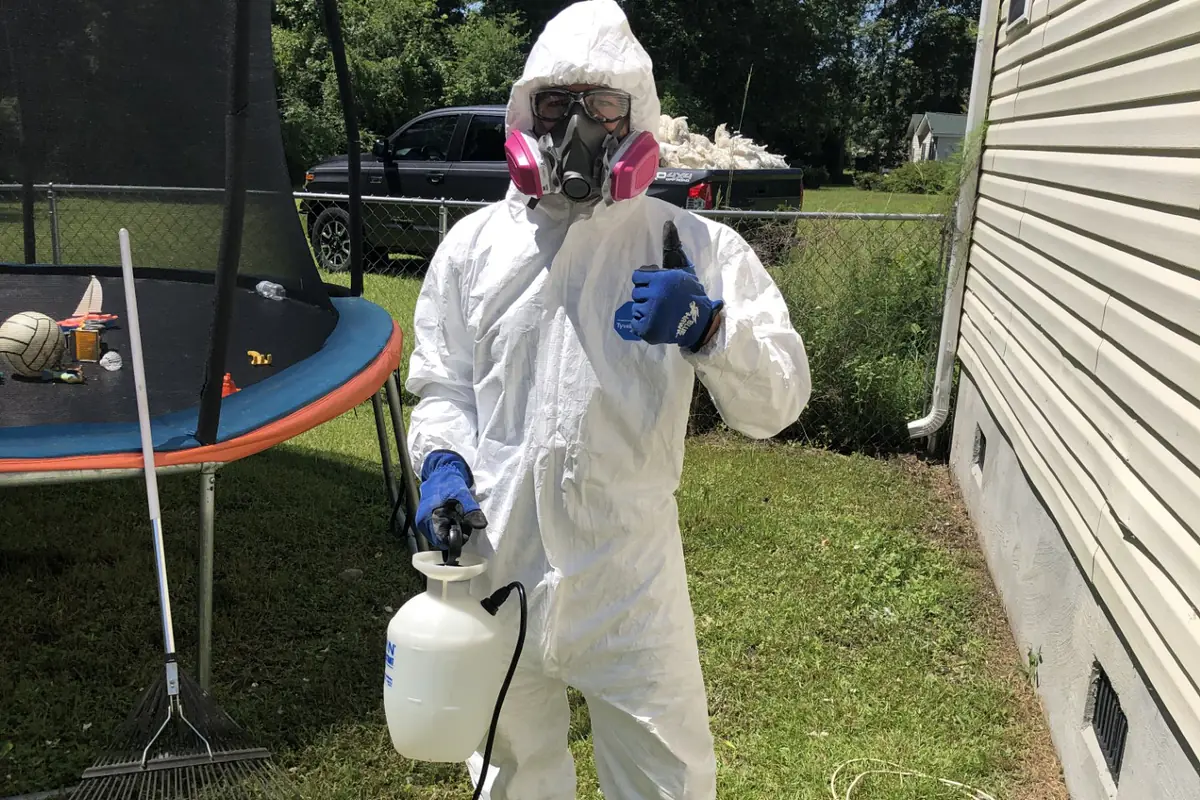
Can a new construction home really have mold or a musty smell already?
It can. Mold needs moisture and a surface, and the air system in a new house has both from day one. The EPA names condensation on or near the cooling coil as a major factor in moisture contamination of an air system (EPA, Should You Have the Air Ducts in Your Home Cleaned?). Whether it happens in your house depends on the moisture, not on the age of the house.
It is not a defect you caused. If the smell arrives when the AC starts and fades when it stops, the air system is the place to look.
Is it the building materials drying out, or is it humidity in the ducts?
The timing tells you. A smell that tracks the AC running points at the air system. A smell that is there whether or not the AC runs points somewhere else in the house, and that is a question for your builder or your inspector.
The EPA’s rule is the same either way: the key to mold control is moisture control (EPA, A Brief Guide to Mold, Moisture and Your Home). If your new home still smells musty after the first summer with the AC running, have the system looked at.
Does a tight, energy-efficient home hold more humidity?
It can. The Department of Energy’s Building America program found that in airtight, high-efficiency homes the AC runs less, so “indoor moisture can build up and cause elevated levels of indoor relative humidity” (DOE Building Science report BA-1310).
Whether your house is built that way is a question for your builder, not for us. What we can tell you is the number to hold indoors, and it is in the next section.
What indoor humidity level keeps mold from growing?
Keep it under control and mold loses its fuel. The EPA recommends indoor humidity “below 60 percent (ideally between 30 and 50 percent) relative humidity” (EPA, A Brief Guide to Mold, Moisture and Your Home). The CDC says keep it “no higher than 50%” (CDC, About Mold).
If you see condensation on the ductwork or around vent covers, the moisture is already reaching the surfaces where mold grows. That is the point to have the system treated.
Is this a Cane Bay, Nexton or Carnes Crossroads problem?
Mold needs moisture and a surface, and houses in all three have both. All three communities sit in the middle of our service map.
Whatever the age of the house, the smell comes from the same surfaces inside the air system, and the treatment is the same.
How does treatment help, and what does it cost?
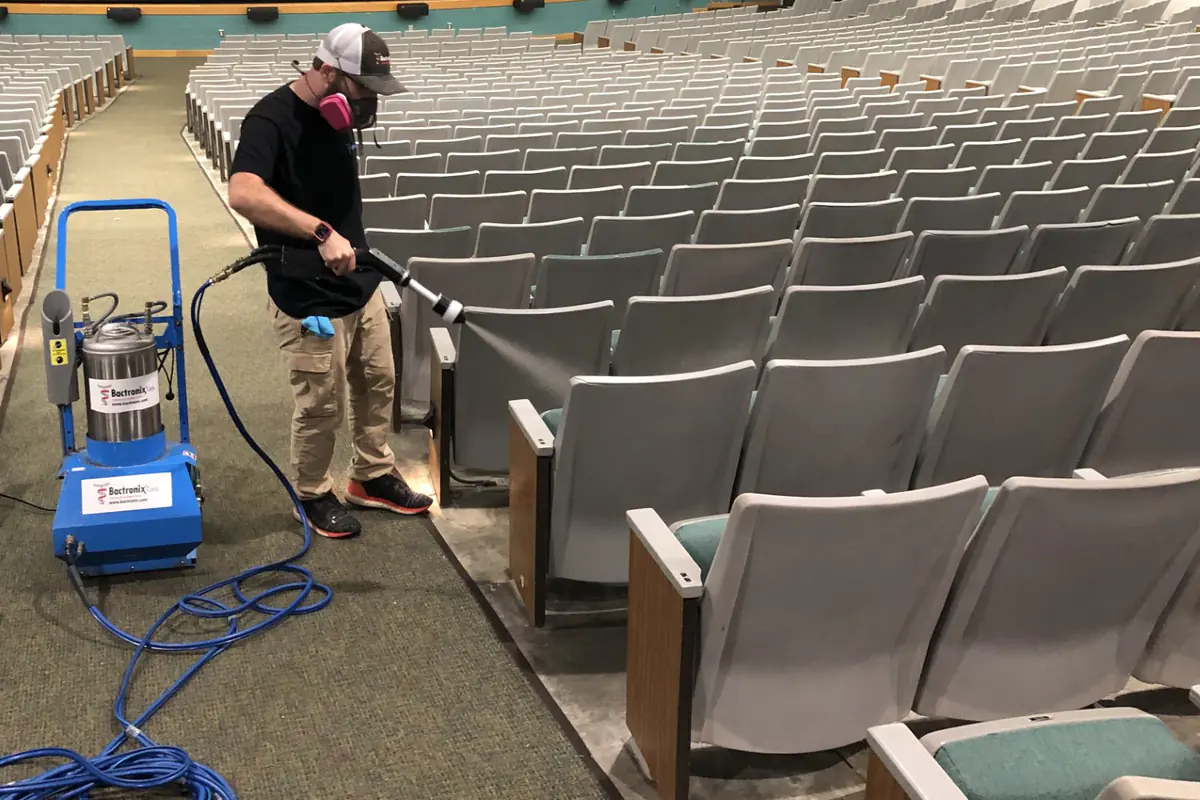
It cleans and treats the surfaces the moisture has already grown mold on. The work is two jobs, usually done on one visit.
Whole-home disinfection is $0.30 per heated square foot with a $200 minimum. On a new build the square footage is already printed on the builder’s spec sheet and again on your closing paperwork. Closets are in it. The garage is in it when its footage is part of the number you were sold, which on a new build is a line you can go and check. BactroKill Plus, an EPA-registered product (EPA Reg. No. 82972-1-90746), goes through the house room by room with an electrostatic sprayer. Bactronix calls that process Bactronizing.
air duct cleaning and treatment is $50 a vent on the same visit, however many you have, with no extra minimum. We clean, then treat, the registers, the duct work, the coil and the outside of the air handler. Booked alone, air duct cleaning and treatment starts at $399.
A whole-home disinfection takes about 30 minutes at 1,500 square feet, 45 at 2,500 and 75 at 3,500. You can stay in the house. Keep people and pets out of a room while we spray it. It is yours again 15 minutes later. No trip charge. You pay on the day.
Greg Busang owns the business and sets the rate himself, and it is the same rate on a townhome as on a four-bedroom. Compare it to conventional HVAC-system mold removal, which national sources price at $2,000 to $10,000 (HomeGuide 2026; This Old House 2026).
Put your square footage in above and you see the whole number before anyone comes out. More detail is on mold treatment in Cane Bay, whole-home disinfection and air duct cleaning and treatment.
Will the musty smell come back if the humidity is not controlled?
Treatment deals with the growth that is there now, and the smell with it. Whether it stays gone depends on moisture. If your home keeps running above the EPA’s 60 percent line (EPA, A Brief Guide to Mold, Moisture and Your Home), new growth can start again on the same surfaces. So we talk through what is feeding the moisture while we are there.
The 12-month written guarantee goes on the invoice: if what we treated comes back inside the year, we come back and re-treat it. No charge. Lasting control pairs the treatment with keeping indoor humidity in the EPA’s 30 to 50 percent band. Some homes need a dehumidifier or a longer AC fan setting to get there. We will tell you straight if that is your situation.
This is treatment. It is not structural mold remediation, and it does not fix an active leak. Moisture that is still wet can grow mold again.
Frequently asked questions
Can a brand-new home already have mold in the ducts?
It can. Mold needs moisture and a surface, and the air system in a new house has both from day one. The EPA names condensation on or near the cooling coil as a major factor in moisture contamination of an air system (EPA, Should You Have the Air Ducts in Your Home Cleaned?). It is not a defect you caused, and cleaning and treating the air system goes after it at the source.
Why does my new Cane Bay or Nexton home smell musty when the AC runs?
The smell is the system pushing it out through the vents. Mold grows where moisture sits inside the air system, and the EPA names condensation near the cooling coil as a major factor in that moisture (EPA, Should You Have the Air Ducts in Your Home Cleaned?). Whether the house is new does not change where the smell comes from.
Is the musty smell just new building materials drying out?
The timing tells you. A smell that tracks the AC running points at the air system; a smell that is there whether or not the AC runs points somewhere else in the house. The EPA is direct: the key to mold control is moisture control (EPA, A Brief Guide to Mold, Moisture and Your Home).
How much does it cost to treat mold in a new Cane Bay home?
Whole-home disinfection for mold is $0.30 per heated square foot with a $200 minimum, and on a new build the square footage is on the builder’s spec sheet and your closing paperwork. Air duct cleaning and treatment is $50 a vent on the same visit, however many you have, with no extra minimum. Air duct cleaning and treatment on its own starts at $399. Compare either to conventional HVAC-system mold removal at $2,000 to $10,000 nationally (HomeGuide 2026; This Old House 2026).
Request a window
Put the heated square feet in above, and the vent count too if you want the air system done on the same visit. Pick the day and window that suit you, and we call or write back to lock in the time.